
Among the organized chaos of medical professionals in Birmingham, a young man named James Stokes carries himself with the measured poise of someone who has found his place. His polished footwear move with deliberate precision as he acknowledges colleagues—some by name, others with the comfortable currency of a “hello there.”
James carries his identification not merely as a security requirement but as a testament of acceptance. It sits against a pressed shirt that betrays nothing of the difficult path that led him to this place.
What sets apart James from many of his colleagues is not visible on the surface. His demeanor reveals nothing of the fact that he was among the first recruits of the NHS Universal Family Programme—an effort crafted intentionally for young people who have been through the care system.
“I found genuine support within the NHS structure,” James says, his voice steady but revealing subtle passion. His remark captures the essence of a programme that aims to reinvent how the vast healthcare system approaches care leavers—those frequently marginalized young people aged 16-25 who have transitioned from the care system.
The numbers paint a stark picture. Care leavers commonly experience greater psychological challenges, financial instability, accommodation difficulties, and reduced scholarly attainment compared to their contemporaries. Beneath these impersonal figures are personal narratives of young people who have maneuvered through a system that, despite good efforts, frequently fails in providing the nurturing environment that molds most young lives.

The NHS Universal Family Programme, launched in January 2023 following NHS England’s commitment to the Care Leaver Covenant, embodies a substantial transformation in institutional thinking. At its core, it acknowledges that the entire state and civil society should function as a “universal family” for those who have missed out on the stability of a conventional home.
Ten pioneering healthcare collectives across England have blazed the trail, developing frameworks that reconceptualize how the NHS—one of Europe’s largest employers—can open its doors to care leavers.
The Programme is thorough in its strategy, initiating with thorough assessments of existing practices, forming management frameworks, and garnering executive backing. It understands that effective inclusion requires more than good intentions—it demands concrete steps.
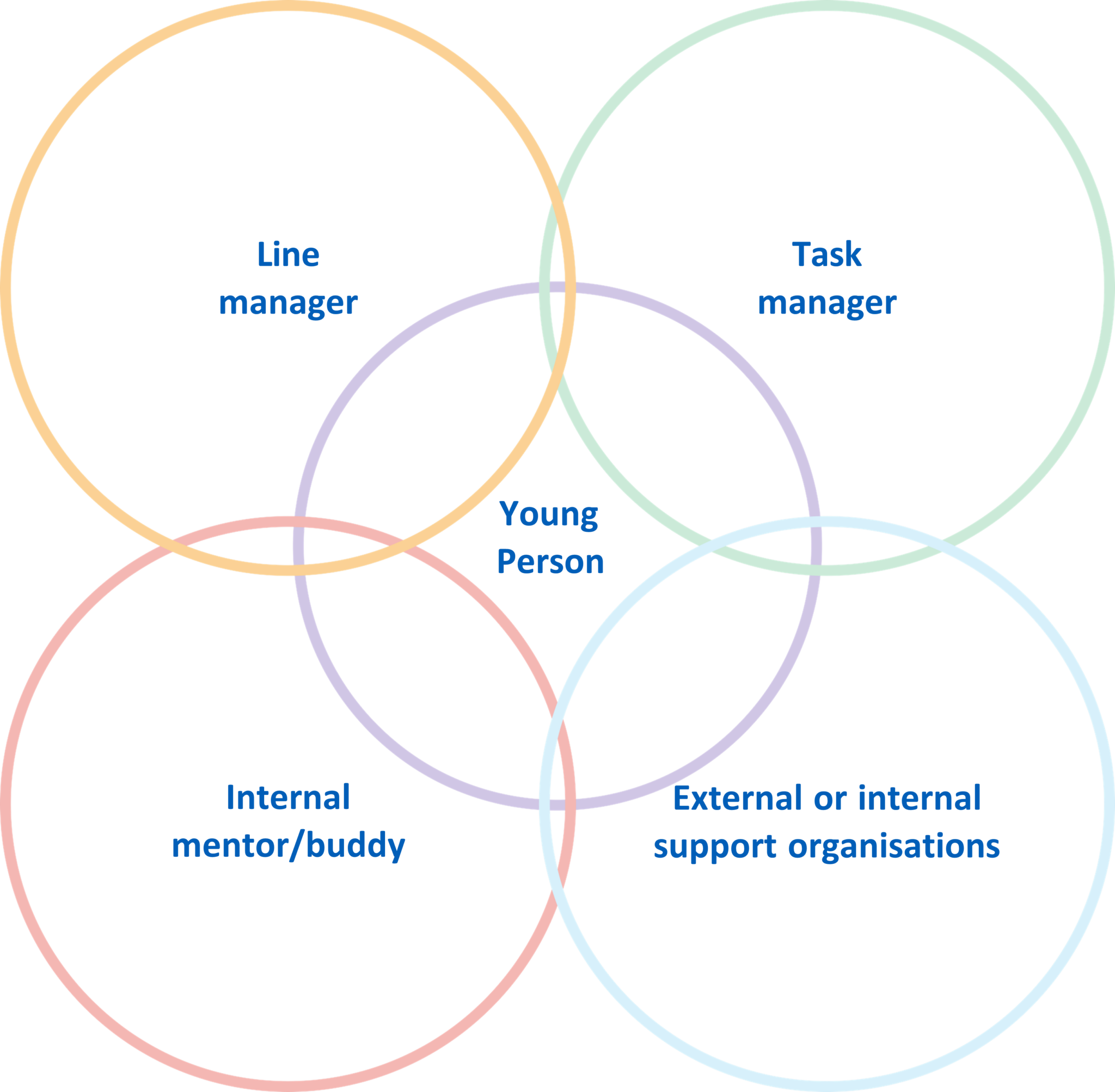
In NHS Birmingham and Solihull ICB, where James started his career, they’ve created a regular internal communication network with representatives who can provide help and direction on mental health, HR matters, recruitment, and inclusivity efforts.
The conventional NHS recruitment process—structured and possibly overwhelming—has been intentionally adjusted. Job advertisements now highlight personal qualities rather than numerous requirements. Application procedures have been redesigned to consider the particular difficulties care leavers might experience—from not having work-related contacts to having limited internet access.
Perhaps most significantly, the Programme acknowledges that starting a job can pose particular problems for care leavers who may be handling self-sufficiency without the safety net of parental assistance. Concerns like travel expenses, identification documents, and bank accounts—assumed basic by many—can become significant barriers.
The brilliance of the Programme lies in its thorough planning—from explaining payslip deductions to helping with commuting costs until that crucial first payday. Even ostensibly trivial elements like break times and office etiquette are carefully explained.
For James, whose professional path has “changed” his life, the Programme offered more than work. It offered him a perception of inclusion—that ineffable quality that develops when someone is appreciated not despite their background but because their unique life experiences enhances the organization.
“Working for the NHS isn’t just about doctors and nurses,” James observes, his eyes reflecting the modest fulfillment of someone who has discovered belonging. “It’s about a family of different jobs and roles, a group of people who really connect.”
The NHS Universal Family Programme exemplifies more than an employment initiative. It stands as a bold declaration that organizations can evolve to welcome those who have experienced life differently. In doing so, they not only alter individual futures but enhance their operations through the special insights that care leavers contribute.
As James moves through the hospital, his presence subtly proves that with the right help, care leavers can succeed in environments once considered beyond reach. The embrace that the NHS has provided through this Programme signifies not charity but appreciation of hidden abilities and the fundamental reality that each individual warrants a family that believes in them.